

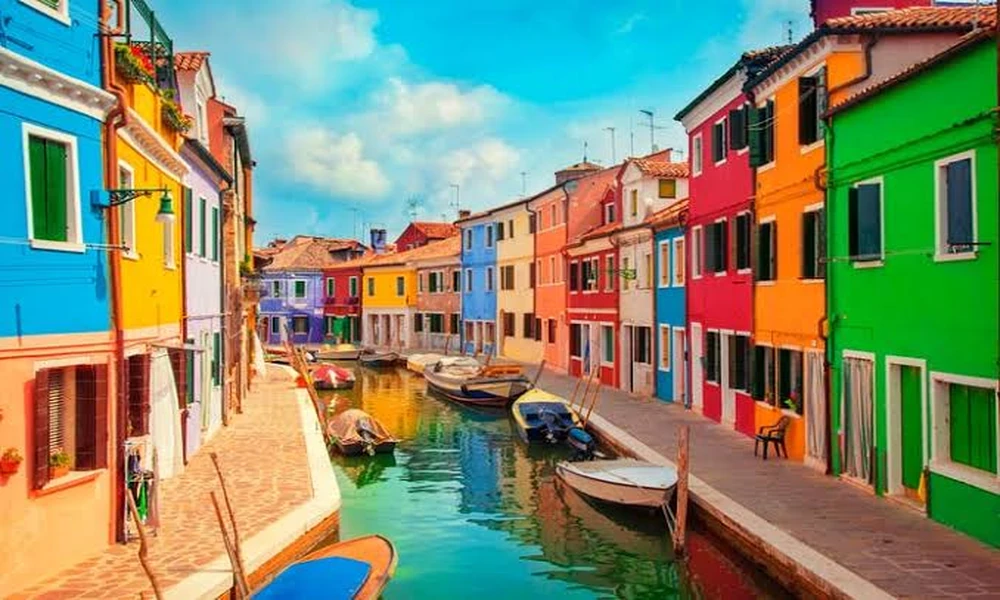
Scroll through any collection of Caribbean travel photos and a pattern emerges fast: turquoise water framed by buildings in shades of pink, yellow, blue, and orange that would look almost gaudy anywhere else. But the Caribbean’s love of color isn’t just an aesthetic choice or a tourism-board strategy – it’s rooted in history, climate, culture, and in some cases, genuinely practical building science. Here’s a look at some of the region’s most vividly painted towns, and the real reasons behind the color.
Willemstad, Curaçao
Willemstad’s Handelskade waterfront, lined with Dutch colonial buildings in bright pastels, is one of the most photographed streets in the Caribbean, and it comes with a surprisingly specific origin story. According to local legend, a 19th-century governor suffered from migraines he blamed on the glare of sunlight reflecting off white buildings, and issued a decree requiring buildings to be painted in color instead. Whether or not the migraine story is entirely accurate, the result is a UNESCO World Heritage-listed waterfront that remains one of the most distinct colonial cityscapes in the world.
Saint John’s, Antigua
Saint John’s blends its colonial Georgian architecture with a distinctly Caribbean color palette, softening the more formal British colonial building style with tropical brights. Redcliffe Quay, a restored 18th-century warehouse district near the harbor, pairs weathered stone and timber with bold paint choices, reflecting how the town’s architecture has been continually reinterpreted through a local, rather than purely colonial, lens over time.
Old San Juan, Puerto Rico
Old San Juan’s coral-colored buildings and blue cobblestone streets create one of the most recognizable color palettes in the Caribbean. The blue stones themselves, known as adoquines, were originally brought over as ship ballast from Europe, giving the streets an unusual bluish-gray sheen when wet that’s become a defining visual feature of the old town. The buildings’ pastel facades, meanwhile, reflect a Spanish colonial tradition of using color to distinguish neighborhoods and buildings within densely packed urban centers.
Roseau, Dominica
Roseau’s colorful wooden buildings reflect a practical adaptation as much as an aesthetic one. Wood construction, common throughout Dominica due to the island’s mountainous, volcanic terrain and historic vulnerability to earthquakes, lends itself naturally to paint as both a decorative and protective measure, since paint helps shield timber from the region’s intense sun and heavy tropical rainfall. The resulting rainbow of small houses climbing the hillsides gives Roseau a distinctly different visual character from the stone-heavy colonial towns found elsewhere in the region.
The Deeper Reasons Behind the Color
A few recurring themes explain why color shows up so consistently across Caribbean towns, regardless of which European power originally colonized them:
Heat management. Lighter, brighter colors reflect more sunlight than dark tones, helping keep interiors cooler in intensely hot climates – a practical building consideration that predates any aesthetic trend.
Cultural identity and resistance. In many post-colonial Caribbean communities, vibrant color choices became a way of reclaiming identity from more austere colonial building traditions, turning architecture into a form of cultural self-expression.
Material availability. Historically, certain pigments were more readily available or affordable in specific regions, subtly shaping local color traditions over generations even after the original material constraints disappeared.
Tourism reinforcement. In more recent decades, the popularity of colorful towns in photography and media has encouraged some communities to actively maintain or even expand their traditional color schemes, turning a historical building choice into an intentional part of local identity and economy.
Seeing Them for Yourself
Because these standout towns are spread across different islands and island groups, seeing several in a single trip usually requires covering real distance across the region. This is part of why itineraries built around Caribbean cruises often appeal to travelers chasing this specific kind of visual, town-hopping trip – many routes include stops in colorful port towns like Willemstad and Old San Juan, letting travelers walk through multiple distinct color traditions without needing to book separate inter-island flights between each one.
For readers interested in the architectural history behind Caribbean color traditions more broadly, academic and preservation-focused writing on Caribbean colonial architecture offers useful context beyond what a typical travel guide covers.
Color as Identity, Not Decoration
What ties these towns together isn’t just visual appeal – it’s that the color itself tells a story about climate, colonial history, and cultural identity that’s easy to miss if you’re only looking for a good photo. Understanding why a town is painted the way it is transforms a nice backdrop into something closer to a readable piece of history, one that happens to also be one of the most beautiful things you’ll see on the trip.